Every December, someone in a small office asks the same question on the team WhatsApp group: "Sir, next year's holiday list kab aayegi?" And every year the owner copies a list from a government website, forgets that half of it doesn't apply to a private office, and discovers in October that Diwali falls on a Friday and nobody planned for it.
We run a social media agency, so for us the holiday list isn't just an HR document. It decides when posts get made. A festival is a day we need a post live and a day nobody is in the office. Here is the 2027 list we're working from, what a private office actually has to give, and a template you can copy.
What are the central government holidays in 2027?
The Department of Personnel and Training issued the 2027 list in an Office Memorandum dated 16 July 2026. These are the 17 gazetted holidays for central government offices in Delhi and New Delhi:
| Date | Day | Holiday |
|---|---|---|
| 26 January | Tuesday | Republic Day |
| 10 March | Wednesday | Id-ul-Fitr* |
| 23 March | Tuesday | Holi |
| 26 March | Friday | Good Friday |
| 15 April | Thursday | Ram Navami |
| 19 April | Monday | Mahavir Jayanti |
| 17 May | Monday | Id-ul-Zuha (Bakrid)* |
| 20 May | Thursday | Buddha Purnima |
| 16 June | Wednesday | Muharram* |
| 15 August | Sunday | Independence Day, and Milad-un-Nabi* on the same date |
| 25 August | Wednesday | Janmashtami |
| 2 October | Saturday | Gandhi Jayanti |
| 9 October | Saturday | Dussehra |
| 29 October | Friday | Diwali |
| 14 November | Sunday | Guru Nanak Jayanti |
| 25 December | Saturday | Christmas |
* Dates of Islamic festivals depend on the sighting of the moon and can move by a day. Check closer to the date.
Two things stand out for 2027. First, six of the 17 land on a Saturday or Sunday: Independence Day and Milad-un-Nabi share Sunday 15 August, Guru Nanak Jayanti is a Sunday, and Gandhi Jayanti, Dussehra and Christmas are all Saturdays. If your office has Saturdays off, that's three holidays your team effectively loses. Second, Diwali week is short: Diwali is Friday 29 October, with Govardhan Puja and Bhai Dooj on Saturday and Sunday.
Central government staff also get two restricted holidays of their choice from a list of 32, which includes Makar Sankranti (14 January), Raksha Bandhan (17 August), Karwa Chauth (18 October) and Chhath (4 November). It's a good idea to borrow, as you'll see below.
Does a private office have to follow the government list?
No. The DoPT list binds central government offices, not you. A private office has two obligations:
- The three national holidays. Republic Day, Independence Day and Gandhi Jayanti are compulsory for every employer.
- Your state's festival holidays. Each state's Shops and Establishments rules set a minimum number of paid holidays. India Briefing's 2027 employer guide lists, for example, 10 in Karnataka, 9 in Tamil Nadu, 8 in Maharashtra, Gujarat and Telangana, and 8 for shops in Uttar Pradesh.
The rules differ by state, by headcount and by whether you're a shop, an office or a factory, so ask your CA which one applies before you publish. Beyond the minimum, the list is yours to decide.
A 2027 holiday list template for a small office
This is the kind of list we'd publish for a small North Indian office that works Monday to Saturday. It has 10 fixed holidays and 2 floating ones each person picks. Swap the festivals for the ones your state and your team actually celebrate.
| # | Date | Day | Holiday | Type |
|---|---|---|---|---|
| 1 | 26 Jan | Tue | Republic Day | National (compulsory) |
| 2 | 10 Mar | Wed | Id-ul-Fitr* | Festival |
| 3 | 23 Mar | Tue | Holi | Festival |
| 4 | 15 Aug | Sun | Independence Day | National (compulsory), falls on a Sunday |
| 5 | 17 Aug | Tue | Raksha Bandhan | Festival |
| 6 | 25 Aug | Wed | Janmashtami | Festival |
| 7 | 2 Oct | Sat | Gandhi Jayanti | National (compulsory) |
| 8 | 9 Oct | Sat | Dussehra | Festival |
| 9 | 29 Oct | Fri | Diwali | Festival |
| 10 | 30 Oct | Sat | Govardhan Puja | Festival |
| 11–12 | Pick any 2 | Floating: Makar Sankranti (Thu 14 Jan), Pongal (Fri 15 Jan), Good Friday (Fri 26 Mar), Eid-ul-Zuha* (Mon 17 May), Ganesh Chaturthi (Sat 4 Sep), Karwa Chauth (Mon 18 Oct), Chhath (Thu 4 Nov), Christmas (Sat 25 Dec) | ||
Why floating holidays? A team of twelve in an agency rarely celebrates the same festivals. Your editor from Bihar cares about Chhath, your designer from Tamil Nadu about Pongal, your account manager about Eid. Two floating days cost almost nothing, and they stop the yearly argument about whose festival made the list.
Five rules to write under the list
- Publish it by the first week of January, in the same place the team marks attendance, not as a PDF in a chat.
- Floating holidays are requested two weeks ahead, like planned leave.
- Say what happens when a holiday falls on a weekly off. Whether you give another day is your policy decision within your state's rules. Write it down so nobody argues in October.
- Moon-dependent dates may shift by a day. The office follows the date announced locally.
- Client deadlines don't move automatically. Work due on a holiday is finished on the working day before.
How should an agency plan content around office holidays?
This is where most small agencies get caught. The days your clients most want to post on (Holi, Raksha Bandhan, Diwali) are exactly the days your office is shut. The post still has to go live at 9 AM on the festival. So it must be made, approved and scheduled before the holiday starts.
Diwali week 2027 is the one to put in your calendar now. With Diwali on Friday, Govardhan Puja on Saturday and Bhai Dooj on Sunday, many offices will be closed from Friday to Sunday. Everything for Dhanteras (Wednesday 27 October) through the following Monday should be approved by Thursday 28 October at the latest, and ideally a week earlier, because clients are slower to approve during festival week too. Our Indian festival marketing calendar for 2027 lists the brief-by date for every major festival.
- Mark office holidays on the content calendar before you plan the month, not after.
- Plan each post's making day separately from its posting day. A post going live on a holiday is made on the last working day before it.
- Schedule festival posts in advance so they publish without anyone logging in. Here's how to schedule reels in advance.
- For a long holiday run, send the client every post for the week in one approval batch, three or four days ahead.
How we handle holidays in our own office
In My Digital Sevak, the office holiday list lives in Settings, under Tasks. Three things use it:
- Content calendars. Before a month's calendar is loaded, the assistant asks which days that month are office holidays. Any post whose making day lands on a holiday or a Sunday moves to the working day before. If a holiday is added later, posts not yet handed in move too.
- Attendance. A holiday shows as Holiday in the team's day and month view, not as an absence. More in our attendance app guide for small offices.
- Monthly scorecards. Sundays, office holidays and planned leave don't count against anyone's attendance score.
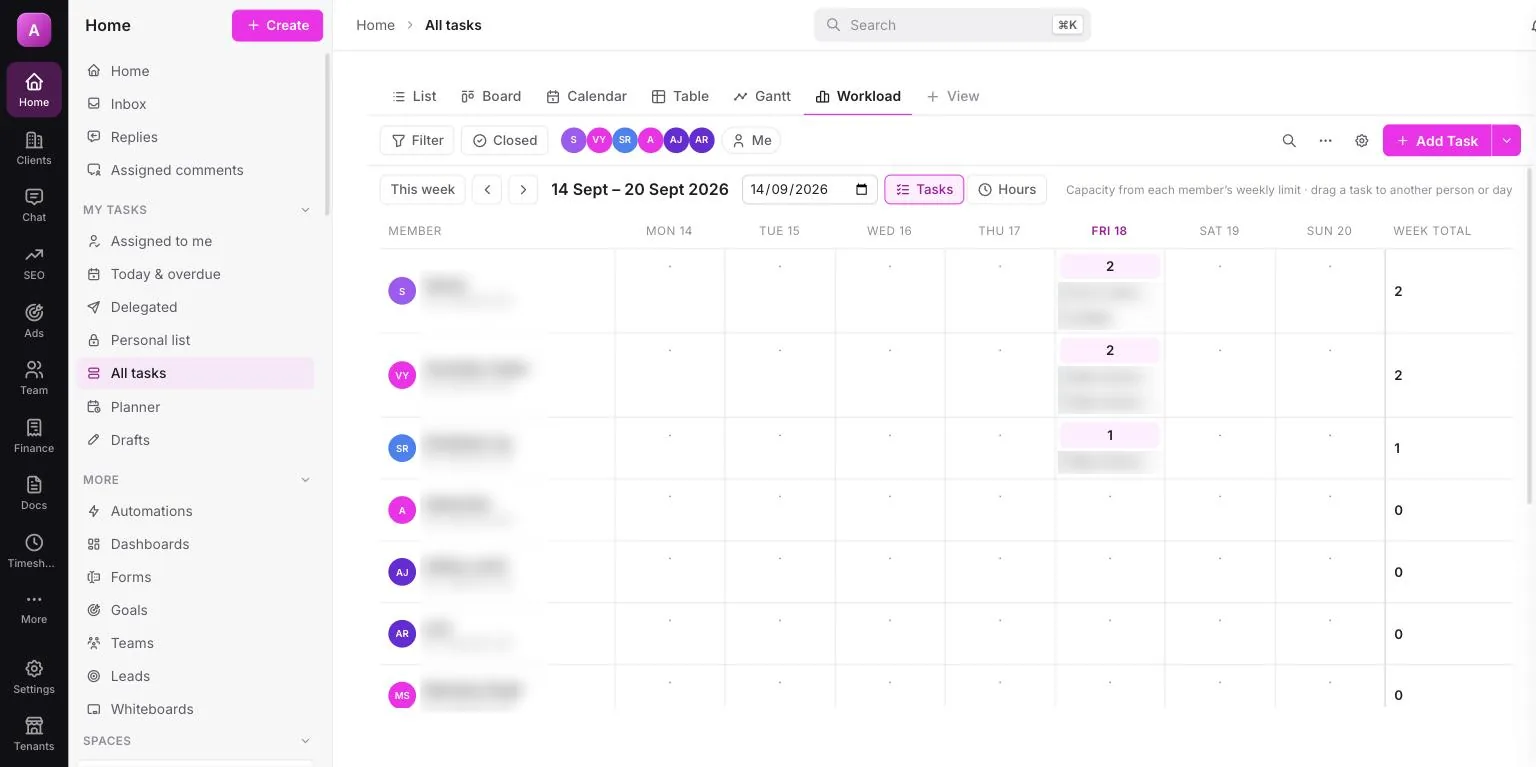
To be clear about the limits: the app doesn't come with a pre-loaded government or state holiday list, and it doesn't handle floating holidays as a separate type. Add your list once a year, and record a floating holiday as planned leave. If you run an agency in Uttarakhand like us, our Dehradun page covers the local market.
Frequently asked questions
How many holidays does a private company in India have to give?
Every private employer must give the three national holidays: Republic Day, Independence Day and Gandhi Jayanti. On top of that, state law sets a minimum number of paid festival holidays, which varies by state, for example 10 in Karnataka and 8 in Maharashtra or Gujarat. Most small offices give 10 to 12 in total.
Do private offices have to follow the central government holiday list?
No. The DoPT list of 17 gazetted holidays is for central government offices. Private offices follow their state's Shops and Establishments rules and choose their own festival holidays within them. Many private offices use the government list as a starting point and pick the festivals their team actually celebrates.
When is Diwali in 2027?
Diwali falls on Friday, 29 October 2027, according to the central government holiday list. Dhanteras is two days earlier and Govardhan Puja and Bhai Dooj follow on Saturday 30 and Sunday 31 October, so many offices will be closed or half-staffed from Friday to Sunday that week.
Sources checked on 26 November 2026: DoPT Office Memorandum F. No. 12/2/2023-JCA dated 16 July 2026 (gazetted and restricted holidays for 2027), as reproduced by StaffNews; India Briefing, "India's 2027 Public Holiday Calendar" (11 November 2026). This is not legal advice; check your state's rules with your CA.
Holidays, attendance and the content calendar in one place
An office holiday list that moves making days off holidays, attendance that knows a holiday from an absence, and scheduled festival posts, in the same agency workspace as your approvals and invoices. From ₹999/month. Try it free for 3 days, no card needed, with a 7-day money-back guarantee.