Every proposal template you will find for this search was written for an American buyer. They open with an executive summary, run an unrequested audit, put the investment on slide 34 and assume the reader will click a tracked link. Send that to a manufacturer in Ludhiana and it will be forwarded to his brother-in-law with one question: "final kitna?"
This is the structure we converged on after a few hundred proposals in India. It is shorter than what the tools give you, it puts money early, and it answers the three questions that actually stall an Indian deal — GST, who pays for the ads, and what happens when the client sits on approvals.
What should a social media proposal include?
- The brief, played back. Three to five lines proving you listened. Their business, their current problem, the outcome they said they wanted.
- What you will deliver, as numbers. A table. Counts, not adjectives.
- How the work will run. Calendar, approval, publish, report — with the client's own step marked.
- The price. Fee, GST, total payable. Nothing hidden under "starting from".
- Ad spend, separately. Who pays whom, and on whose invoice.
- Payment terms and validity. When, how, and for how long this quote stands.
- What is not included. The section that saves the relationship in month three.
- Start date and first-month timeline. What happens in days one to fifteen.
- How to accept. One instruction, one contact, one next step.
That is it. No company history section, no team photos, no "why social media matters in 2026" — the client already believes in social media, which is why they are reading your proposal.
Why the order matters more than the content
Indian SME buyers read a proposal backwards. They look at the price, then at the deliverable count, then — if both survive — at whether you seem organised enough to be trusted with the brand's Instagram password. So put the price on page two or three. Burying it signals that you are embarrassed by it, and it forces the reader to scroll, which is where proposals go to die.
The one thing worth knowing about the mechanics: Proposify's analysis of its own platform data (742,000 proposals, overwhelmingly North American) reports an average close rate of about 34%, with digital marketing proposals near 48%, and finds proposals that include e-signatures close roughly 60% faster. The geography does not transfer, but the direction does — the less friction between reading and agreeing, the faster you get paid.
The deliverables table (numbers, not adjectives)
This is the only page most clients will screenshot. Write it so it cannot be misread six months later.
| Deliverable | Quantity / month | Notes |
|---|---|---|
| Static posts / carousels | 12 (8 static, 4 carousel) | Design + copy; up to 2 rounds of changes per post |
| Reels | 6 | Edited from footage you supply, or from our shoot day |
| Stories | 15 | Includes reposting your tagged content |
| Shoot days | 1 per month | Half day, one location; extra days billed at ₹— per day |
| Community management | Mon–Sat, replies within 4 working hours | Comments and DMs; escalations to you on WhatsApp |
| Reporting | 1 report, by the 5th | Reach, engagement, leads, spend; 30-minute review call |
Two habits worth copying. Write revisions as a number inside the table, because "revisions till satisfaction" is the single most expensive phrase in Indian agency life — the cost of that leak is worked out in our piece on agency profit margins. And state the reply window for community management in working hours, or you have quietly promised a Sunday.
How do you present pricing, GST and TDS?
Three rows, every time:
| Line | Amount |
|---|---|
| Monthly retainer (services) | ₹45,000 |
| GST @ 18% | ₹8,100 |
| Total payable per month | ₹53,100 |
| Less TDS, if deducted by you | Deducted on ₹45,000 only, not on GST |
Quote the fee exclusive of GST and show the total underneath. If you quote inclusive and your competitor quotes exclusive, you look 18% more expensive for identical work. And add the TDS line proactively: a company client will deduct tax at source, and saying so first tells them you have been through this before. TDS applies to the service value, not the GST component — the sections, rates and the invoice wording that prevents a dispute are covered in TDS on digital marketing services, and the invoice itself in our GST invoicing guide.
If you are unsure what number belongs in the first row at all, our rate card by city tier is the honest version, and the capacity maths tells you what you can actually deliver at that price.
Ad spend: the paragraph that prevents a year of arguments
Never fold ad spend into the retainer figure. Name the model in one line:
- Client pays the platform directly. Their card or their credit line on Meta and Google, their invoice, their input credit. Cleanest option, and the one we recommend by default.
- Client reimburses us at cost. You fund the spend and recover exactly what was spent, shown separately on the invoice with the platform document attached. For this to stay outside your taxable value as a reimbursement, the conditions in Rule 33 of the CGST Rules — acting as a pure agent, no markup, the amount shown separately, and the vendor's invoice in the client's name — all have to hold. In practice, if the Meta invoice is in your agency's name, treat it as your own supply and expect it to be taxable.
- Management fee on spend. A percentage of spend, or a flat monthly ads fee. This is your service income and carries GST like any other fee.
Write which one applies, in one sentence, in the proposal. It costs you a line and saves a quarter-end argument with someone's accountant.
The approvals section nobody writes, and everybody needs
Most proposals describe what the agency will do and stay silent on what the client must do. Then the calendar goes out on the 28th, approval arrives on the 6th, and the client concludes that you are slow. Put their obligation in writing while they are still in a good mood:
- Calendar shared by the 25th for the following month.
- Feedback consolidated and returned within three working days, from one named person.
- Anything not responded to within five working days is treated as approved and scheduled.
- Content approved and then changed after publishing counts as a new deliverable.
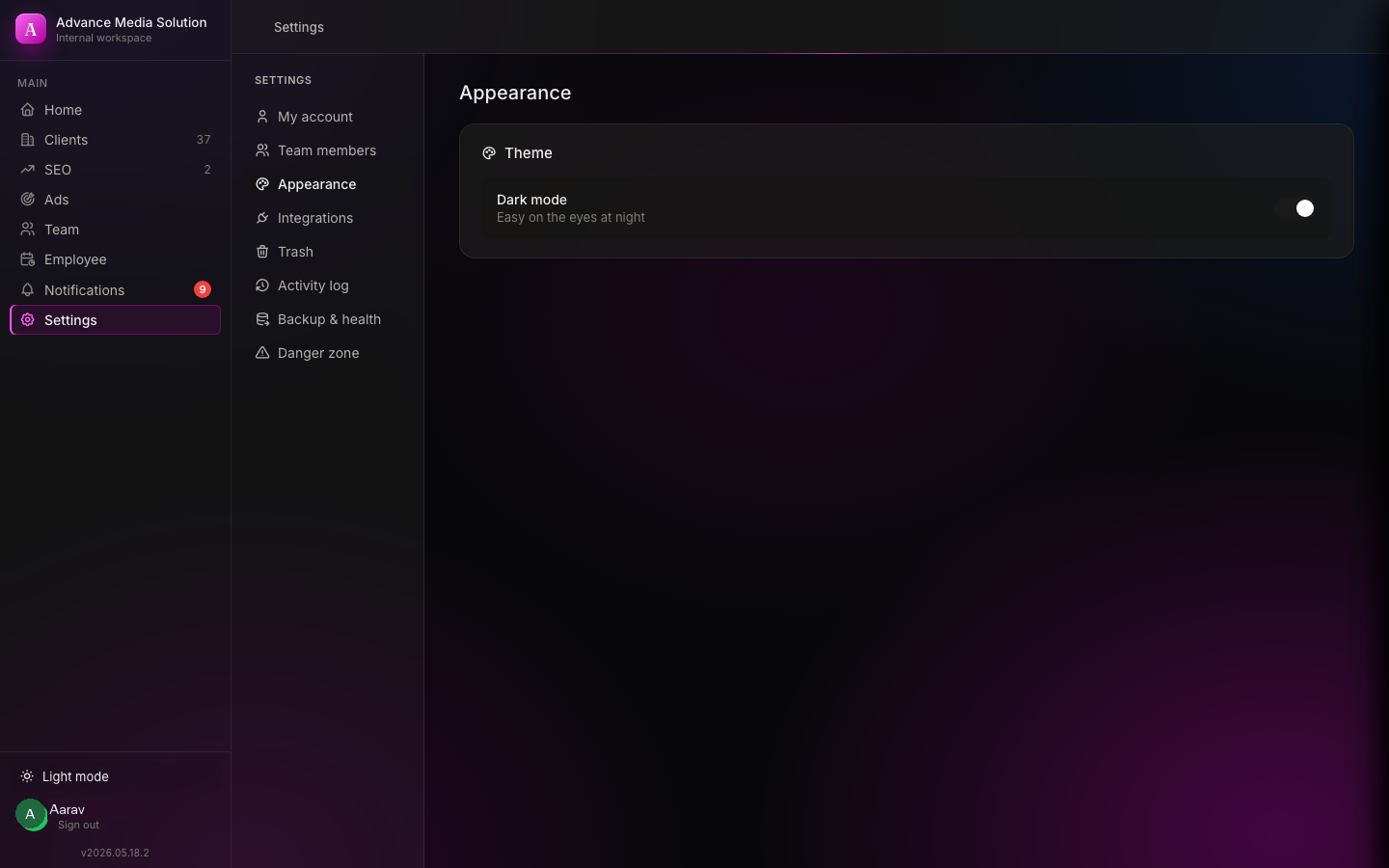
That fourth line has saved us more money than any price increase. Show them the mechanism too — a screenshot of the client app where they tap approve beats a paragraph describing it, and for a small agency this is often the moment you beat a bigger competitor, as we argued in how small agencies win. The workflow itself is in our approval workflow template and client approval app guides.
What to leave out
- The unpaid audit. A free 12-slide teardown of their current Instagram reads as criticism of the person who will sign your cheque, and it hands your thinking to whoever they hire instead. Three observations, maximum.
- Guaranteed numbers. No promising 10,000 followers or a specific lead count. Promise inputs and process; report outcomes honestly.
- Competitor trashing. If they had an agency before, say nothing about them. Half the time the previous agency was the client's cousin.
- Stock statistics. "Social media has 4.9 billion users" convinces nobody who was already searching for an agency.
- Legal clauses. A proposal is a sales document. IP, termination, non-compete and account ownership belong in the retainer agreement that follows.
The skeleton you can copy
Five pages, in this order. Rewrite the italic guidance in your own words and keep everything else fixed — a template only pays for itself if you stop redesigning it per prospect.
Page 1 — Title and the brief played back
Client name, your name, date, quote valid for 30 days. Then: "What we understood" — their business in one line, the problem in two, the outcome they named in one.
Page 2 — Scope and price
The deliverables table. Immediately below it, the three pricing rows plus the TDS note. Contract term (we recommend three months minimum), and what month one includes that later months do not — audit, brand kit, first shoot.
Page 3 — How the work will run
Four steps with dates attached: calendar by the 25th, your approval in three working days, we publish, report by the 5th. One screenshot of the approval screen. The auto-approval line.
Page 4 — Ad spend, payment terms and exclusions
Which ad-spend model applies. Payment terms: our default is the first month in advance before work starts, then the 1st of each month, with a named late-payment consequence. NEFT and UPI details. Then a short "not included" list: ads budget, influencer fees, printing, photoshoot travel outside city, platform subscriptions, more than the stated revisions.
Page 5 — Proof and how to say yes
Two relevant results, stated plainly with real numbers and the time period. One instruction: "Reply 'confirmed' on this email or WhatsApp and we will send the agreement and the first invoice the same day." Your name, number, GSTIN.
Send it as a PDF, named ClientName-Proposal-Sep2026.pdf. Indian buyers forward PDFs; they do not open tracked proposal links, and a file their CA can read without signing up for anything removes one more reason to delay. Follow up by phone the next working day — not with a nudge email — and if they go quiet, our notes on getting clients and late-paying clients cover what to do next. The moment they say yes, switch straight into onboarding, because the first fortnight is what decides whether this client ever refers you — whether they are in Indore, Jaipur or Hyderabad.
Frequently asked questions
How long should a social media proposal be?
Four to six pages, or eight to ten slides. An Indian SME owner decides in the first two minutes and forwards the file to a partner or a chartered accountant who reads only the pricing page. Anything longer than six pages is usually an agency reassuring itself rather than answering the buyer.
Should a proposal quote prices inclusive or exclusive of GST?
Quote the fee exclusive of GST, then show the GST line and a total payable line underneath. Indian buyers compare headline numbers, and a GST-inclusive quote looks more expensive than a rival's exclusive quote for the same work. Showing all three rows removes the argument entirely.
Is a proposal the same as a retainer agreement?
No. The proposal sells the engagement and is not designed to be enforceable. Once the client says yes, send a retainer agreement covering intellectual property, termination, approval deadlines, account ownership and payment terms. Signing only a proposal is how agencies end up arguing about scope with nothing in writing.
How should ad spend appear in a social media proposal?
Separately from your fee, always, with the funding route named. State whether the client pays Meta and Google directly, reimburses you at cost, or pays a management percentage. Ad spend folded into one monthly figure makes your fee look inflated and creates a GST question nobody wants later.
Sources
- Proposify, sales closing statistics — platform data across roughly 742,000 proposals: ~34% average close rate, ~48% for digital marketing, and faster closes with e-signatures. First-party vendor data from a largely North American customer base, so directional only.
- Rule 33 of the CGST Rules, the pure agent concept — the conditions under which a reimbursed expense stays outside the value of your supply: acting as a pure agent, the amount shown separately on the invoice, no markup, and the expenditure incurred on the recipient's behalf.
Proposal to first invoice, without retyping anything.
Scope, approvals, GST invoicing and reports in one workspace — so the promises in your proposal are the ones the client actually sees. From ₹999/month for your whole team: see the agency management software and the Instagram scheduler.