Every agency gets this call eventually. It's rarely the founder who started the retainer. It's the brother who joined the business, or the CA doing the year-end review: "We pay you ₹40,000 a month. What are we getting?" If the answer is reach, followers and an engagement rate, the retainer is already on its way out.
The tool vendors who rank for this question mostly say the same sensible things. Agorapulse says to ask clients for their KPIs at the start and tie them to money. Cloud Campaign says to report direction rather than false precision when the client doesn't track revenue. Both are right. What they skip is the Indian small-business reality: half the enquiries arrive on WhatsApp, a third of sales happen at a counter, and nobody at the counter asks where the customer came from. So here's the version we use with our own retainer clients.
Why is social media ROI so hard to prove?
Because most of the value leaves the platform before it turns into money. A customer sees a reel and screenshots the price. They forward it to their spouse on WhatsApp, walk into the showroom on Sunday and pay cash. Instagram saw a view. Google Analytics saw nothing. The client saw a walk-in.
Paid social is easier. Meta reports leads, conversations and purchases against spend, though even that depends on attribution windows. (Our Meta Ads report template covers that argument.) Organic social has no price tag per result. So agencies fill the gap with vanity numbers, and clients learn to ignore them.
You won't solve attribution. What you can do is agree in advance which imperfect numbers count. Then report those honestly every month.
Step 1: Agree the goal before you agree the numbers
Do this in the onboarding call, not in month four. Ask one question: "If this works, what will you see more of in the business?" Then turn the answer into something countable. Here's how it usually lands for the categories we handle:
| Business | Real goal | What the client can count | What we report on top |
|---|---|---|---|
| Clinic / dentist | Booked appointments | Reception tally: "found us on Instagram" | Appointment enquiries from social, cost per enquiry |
| Jewellery / furniture showroom | Showroom visits that buy | Walk-ins who mention a post, social-only offer code | Enquiries, redeemed codes, value of those bills |
| D2C brand | Online orders | Store orders with social UTM or discount code | Revenue from social, ROAS on paid |
| Real estate | Site visits | Leads from forms and WhatsApp, site visits booked | Cost per lead, cost per site visit |
| Coaching institute | Admissions | Counselling calls, admission form source field | Enquiries per batch, admissions traced to social |
| Restaurant / café | Covers and orders | Reservation source, offer redemptions | Redemptions, reservation enquiries |
Write the agreed goal and its number into the retainer agreement or the onboarding notes. Six months later, when someone new asks "what are we getting?", you point at the line you both signed. (Our retainer agreement guide shows where it goes.)
Step 2: Make the number trackable, cheaply
None of this needs a CRM or a developer. Pick the two or three that fit the business:
- UTM links on every bio link and story link. Visits then show up in the client's Google Analytics under the Organic Social channel. GA4 sorts traffic into its default channel groups using the source and medium you set. Without UTMs, a lot of that traffic lands in Direct or Referral, and social gets no credit.
- A prefilled WhatsApp message. Point the bio link to a WhatsApp chat that opens with "Hi, I saw your Instagram post about…". Every chat that starts with that line came from social, and the client's staff can count them in a week.
- A social-only offer code. "Show this post / use code INSTA10." Redemptions are the cleanest proof an offline business can get.
- One question at the counter or reception. "How did you hear about us?" with four tick boxes on the billing pad. Low-tech, and it works if the owner makes staff ask it.
- Instagram's own action numbers. Profile visits, website taps and call/email taps are closer to intent than reach. Report them as supporting, not as proof.
How do you calculate social media ROI?
The formula is simple. The discipline is in using the full cost and only value the client accepts.
ROI = (value traced to social − total cost of social) ÷ total cost of social
Total cost means your retainer, the ad spend, and production such as shoots or influencer fees. A quick illustration with made-up numbers for a showroom client:
| Line | Amount | Where it comes from |
|---|---|---|
| Retainer + ad spend + one shoot | ₹70,000 | Your invoice and Ads Manager |
| Bills with the INSTA code | 14 bills, ₹2,10,000 | Client's billing software |
| Client's gross margin on those bills (30%) | ₹63,000 | The owner tells you |
| ROI on margin | −10% | (63,000 − 70,000) ÷ 70,000 |
Yes, that example is negative, and that's the point. Calculating on revenue would show +200% and look great until the owner's CA does the maths on margin. Use margin when the client will share it. Show the inputs, not just the percentage. And remember that code redemptions are the floor, not the total, since plenty of customers forget the code. That's where the next section comes in.
Which numbers survive a CFO's question?
Sort everything in the report into three labelled tiers. This one habit has saved more retainers for us than any dashboard:
- Proven. Money or leads the client can verify in their own system: code redemptions, UTM-tracked orders, Meta leads they called back. This is the ROI line.
- Inferred. Counts that point at social but can't be tied to a bill: WhatsApp chats starting with the prefilled line, "saw you on Instagram" ticks at reception. Report these as a trend, not as rupees.
- Supporting. Reach, views, followers, profile visits, best post. They explain why the first two moved. They are never the headline.
When the brother-in-law or the CA asks the hard question, the tiers do the arguing for you. You aren't claiming every sale; you're showing the ones you can prove, the ones you suspect, and why.
What if results take months?
Organic social for a local business rarely moves revenue in the first 90 days. Say so in the proposal and agree leading indicators for months one to three: posting consistency, profile visits, enquiries per week. Then hold a proper review at month three where the proven line is the main agenda item. Clients who were promised sales in month one are the ones who leave in month two. Our client churn playbook goes deeper on setting that expectation.
And don't forget to show the work. Owners rarely see the 22 posts, 3 shoots and 40 revision rounds that produced the numbers. A short "what we delivered" block next to the results makes the retainer feel like what it is: a team, not a monthly debit.
How we put it in the monthly report
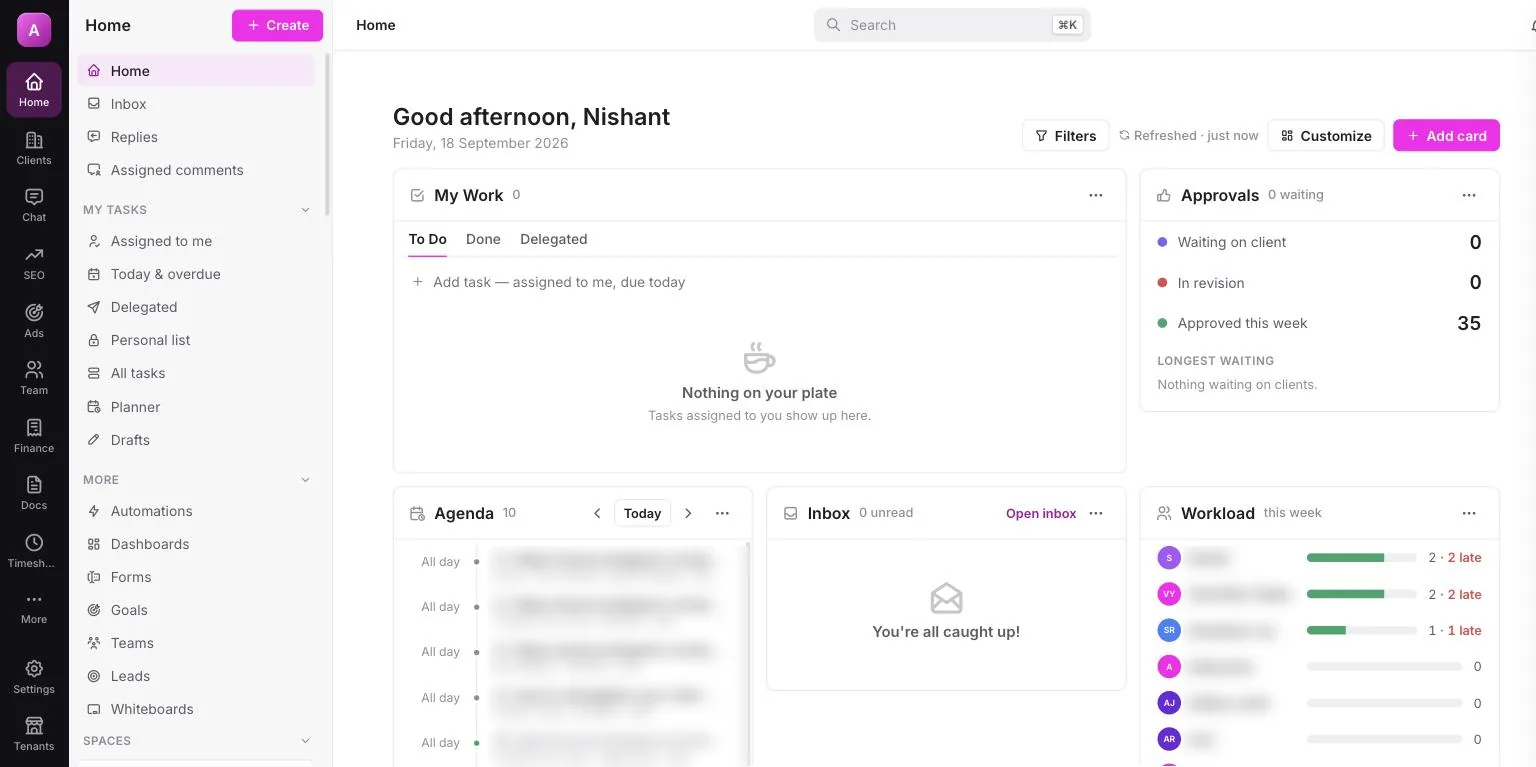
In My Digital Sevak, the monthly client report is built from the dates you pick. It pulls the Instagram numbers (views, reach, profile visits, interactions, website clicks and followers), the content delivered, shoots done and ad spend. If the brand runs Meta ads, the Ads report adds spend, results, cost per lead or conversation, and ROAS for sales campaigns. Both go out as a PDF, alongside the GST invoice.
The honest limit: no social tool can see the client's billing pad or their WhatsApp chats. The proven and inferred tiers above still come from the client, so we ask for them on the 28th and write them into the report's top line by hand. That one manual step is what turns a social report into an ROI report. For the rest of the layout, see how we structure monthly social media reports. If you're an agency in Delhi NCR or anywhere else handling a dozen retainers, this is the part worth standardising first.
Frequently asked questions
How do you calculate social media ROI for a client?
Take the value the client can trace to social in the month, such as tracked sales or leads multiplied by their average value, subtract the full cost (your retainer, ad spend and production), then divide by that cost. Show the inputs, not just the percentage, so the client can check every number.
How long does it take to show ROI from organic social media?
Paid campaigns can show cost per lead or sale within weeks. Organic usually needs three to six months before enquiries traced to Instagram are steady enough to count. Say this in the proposal, agree which early signals you will report meanwhile, and review the money line together at month three.
How do you prove ROI if the client doesn't track sales?
Give them one thing to count that costs nothing: a tally of enquiries that mention Instagram, a social-only offer code, or a prefilled WhatsApp message from the bio link. Report those counts as inferred, not proven, and keep reach and followers as supporting numbers rather than the headline.
Reports that show the work and the results
Instagram numbers, content delivered, ad results and the GST invoice, all in one monthly send. From ₹999/month. Try it free for 3 days, no card needed, with a 7-day money-back guarantee.