A client sees a competitor's "honest review" reel doing well in ads and asks for "five of those by next week". You message three creators and get three quotes: ₹1,500, ₹8,000 and ₹25,000 for what sounds like the same 30-second video. None of them is wrong. They're pricing different things, and most of the difference sits in two places nobody puts in the first message: how much production the creator handles, and where the brand is allowed to use the video.
This guide is written from the agency side of the table. You're the one buying UGC for a client, building it into a quote, and answering for it when the ad doesn't perform.
What is a UGC creator, and how is it different from an influencer?
An influencer is paid mainly for their audience. The post goes on their handle, and the price tracks followers and engagement. A UGC creator is paid for the content itself. The video goes on the brand's page or into the brand's ads, and the creator's own following barely matters. A creator with 2,000 followers who can hold attention for the first three seconds is worth more to a performance campaign than a 2-lakh account that can't.
That difference changes how you pay. Influencer fees are about reach. UGC fees are about production effort and usage rights. If the creator also posts the video on their own handle, that part is influencer marketing, and the ASCI disclosure rules apply to it.
How much do UGC creators charge in India?
There is no official rate survey for Indian UGC, and the guides that publish numbers are mostly written by creator platforms with something to sell. They also disagree with each other. Boss Wallah puts beginners at ₹500–2,000 per video. Fluxnote's 2026 guide starts beginners at ₹2,000–5,000 and puts experienced creators at ₹15,000–50,000. Put side by side, the ranges look like this:
| Creator tier | Typical base fee per video | What you usually get |
|---|---|---|
| Beginner (thin portfolio, few brand jobs) | ₹500 – ₹5,000 | Phone-shot video from your script, 1 revision, organic use |
| Mid-level (solid portfolio, some brand work) | ₹5,000 – ₹15,000 | Better lighting and audio, light scripting help, cleaner edit |
| Experienced (can show ad results) | ₹15,000 – ₹50,000 | Writes the hooks, delivers ad-ready cuts, knows Meta ad formats |
Use these as a sanity check, not a rate card. In practice the biggest swing isn't the tier, it's the scope. A beginner who also writes the script, shoots in a real kitchen and sends five hook versions is doing more work than an "experienced" creator who reads your script once in front of a wall.
Why are paid-ad usage rights billed separately?
Because an organic post lives for a few days, and an ad can run for months on money. A creator who hands over a video for "any use, forever" at the organic rate is underpricing it, and good creators know that. So most of them split the quote into two parts: the video, and the licence to use it.
- Organic use. The brand posts it on its own page. This is what the base fee covers.
- Paid usage. The brand runs it as an ad from its own page. Several 2026 rate guides suggest roughly 20–50% on top of the base fee, depending on how long and where.
- Whitelisting / partnership ads. The ad runs from the creator's handle, through Meta's partnership ads. The creator is lending their name, not just their footage, so this is the most expensive tier. Guides commonly put it at 50–100% of the base fee or a monthly charge.
Our rule: always time-box paid usage (3, 6 or 12 months), name the platforms, and never buy "perpetual" at the organic price. If the client wants perpetual, price it as perpetual and tell them why.
What pushes a UGC quote up?
- Hook variations. Three or four different first lines on the same body. These are the cheapest way to test ads, and worth paying for.
- Raw footage. Lets your editor recut later. Many creators charge extra for it, because you'll get several more ads out of the same shoot.
- Scripting by the creator. Fair to pay for; it's skilled work.
- Location and props. Your product in a real salon, gym or kitchen costs more than a desk shot.
- Rush delivery and extra revisions. Agree the number of revision rounds up front, the same way you do with clients.
- Exclusivity. "No competing brand for 60 days" is a real cost to the creator. Pay for it or don't ask for it.
How should an agency quote UGC to a client?
Keep the creator's fee visible and your management fee separate. Clients understand "creator cost plus our fee for sourcing, briefing and editing". They get suspicious of one lump number that's three times what they found on Instagram. Here's an illustrative quote (made-up figures, mid-level creator):
| Line | Amount |
|---|---|
| 3 UGC videos × ₹6,000 base | ₹18,000 |
| 2 extra hooks per video × ₹750 | ₹4,500 |
| Paid usage, Meta only, 6 months (40% of base) | ₹7,200 |
| Agency fee: brief, sourcing, product shipping, edit and ad cuts | ₹9,000 |
| Subtotal before GST | ₹38,700 |
Put this on the client's invoice as its own line or as an add-on, not hidden inside the retainer. Our add-on price list template has a place for it, and it stops UGC quietly becoming "part of the package" next month.
Tax and paperwork, briefly
Your invoice to the client carries GST at 18% as usual. A creator only charges you GST if they're registered, which most individual creators below the ₹20 lakh services threshold are not. TDS may apply on what you pay creators. Free products a creator keeps can also count as a benefit for TDS purposes, while products returned after the shoot generally don't. Check the current section and rate with your CA; our TDS guide covers the agency side. Put usage, duration, revisions and payment terms in writing every time. Our influencer contract template works for UGC with the posting clauses removed.
Get the client to approve before the ad goes live
The one step agencies skip with UGC is client approval. A creator's video feels "unofficial", so it goes straight from the creator's Drive link into Ads Manager. Then the client sees their product called "cheap" in a hook, while you're already paying for reach. Treat every UGC cut like any other post: upload it, send it for approval, and only run it once the client says yes.
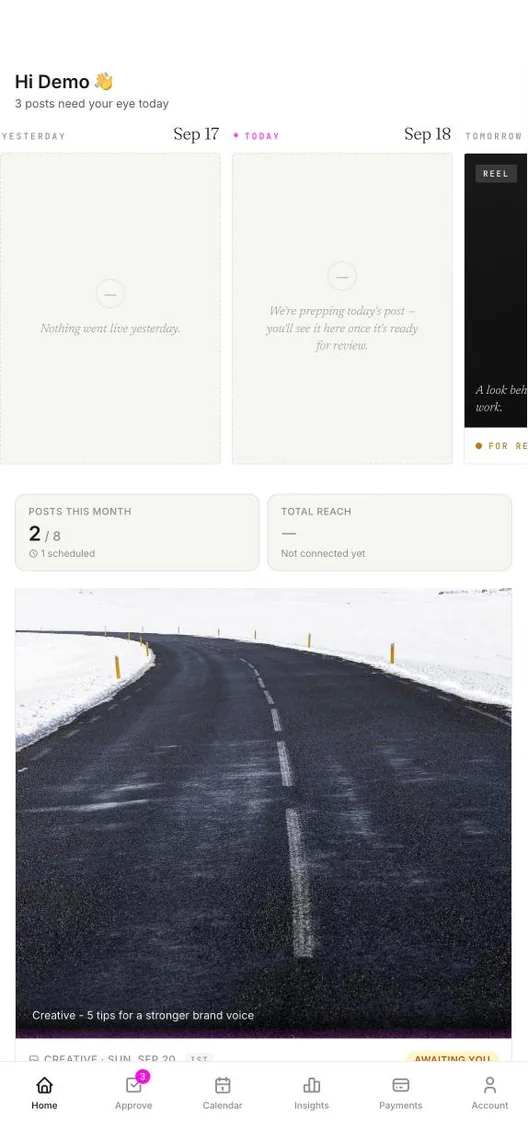
In My Digital Sevak, a UGC video is just another post on the client's calendar. It has its own task, the creator's deadline, the client's approval in the client app, and scheduling through the Instagram scheduler if it's also going out organically. Ads themselves still run in Meta Ads Manager. If you're sourcing creators for clients in Mumbai or anywhere else, the part worth standardising is the brief, the usage terms and the approval, not the rate. The rate will always vary.
Frequently asked questions
How much does a UGC video cost in India?
Published 2026 rate guides put beginner UGC creators at roughly ₹500 to ₹5,000 per video, mid-level creators at about ₹5,000 to ₹15,000, and experienced creators with ad results at ₹15,000 to ₹50,000. That is the base fee for organic use. Paid-ad usage rights and whitelisting are usually charged on top.
Do UGC creators charge extra for using the video in ads?
Usually, yes. Most creators price paid-ad usage separately from the video, because an ad can run for months and earn the brand far more than an organic post. Rate guides suggest roughly 20 to 50 percent of the base fee for paid usage, more for whitelisting, priced by duration and platform.
Is a UGC creator the same as an influencer?
No. An influencer is paid mainly for their audience and posts on their own handle. A UGC creator is paid for the content itself, which the brand posts on its own page or runs as ads. That is why UGC pricing depends on production and usage rights, not follower count.
Brief, approve and schedule UGC with everything else
Calendars, client approvals, scheduling and GST invoices for every client in one workspace. From ₹999/month. Try it free for 3 days, no card needed, with a 7-day money-back guarantee.