Every Indian fashion label on Instagram has the same starter kit: a model shoot on a white wall, a "new collection live" Reel, a discount code in the bio. Then the founder wonders why a Reel with 80,000 views produced forty orders, eleven of which came back.
We've run social for fashion and lifestyle brands long enough to say this plainly: in D2C fashion, the feed that gets the most likes isn't the one that makes the most money. The one that makes money is the one that stops the wrong order before it's placed. This post covers how we plan content for those brands, and what an agency should report to a founder who's watching margins, not followers.
Why is D2C fashion different from other categories on social?
Three things set fashion apart, and the content should respond to all three:
- Returns eat the margin. The buyer can't touch the fabric or try the size. Unicommerce's India D2C Report 2026, built on 410 million+ shipments from 6,000+ D2C brands, found that cash-on-delivery orders in the festive quarter came back at 58%, against under 15% for prepaid. Most of that isn't bad logistics. It's a buyer who wasn't sure.
- Nobody runs out of a dress. The same report says it bluntly: fashion has a retention problem, because customers don't need to reorder the way they reorder shampoo. Repeat purchase has to be created by new drops and a reason to come back.
- The category is crowded. In that report, fashion and accessories grew 21%, the slowest of the categories it tracked. Growth is still there, but it is harder to win, and "we also make co-ord sets" isn't a positioning.
So the content has three jobs: sell the product, answer the fit doubt before checkout, and give past buyers a reason to return. Most brand feeds only do the first.
What should a D2C fashion brand post?
These are the content pillars we plan with. The right-hand column is the point: every pillar should earn its place by removing a reason not to buy, or a reason to return.
| Pillar | Example | What it prevents |
|---|---|---|
| Fit on real bodies | The same kurta on sizes S, L and XXL, each person's height stated on screen | "It looked different on the model" returns |
| Fabric close-ups | Macro video of the weave, the lining, a stretch test, in daylight | "The fabric is cheap" returns |
| Styling Reels | One piece, three ways: office, dinner, a family function | "I don't know what to wear it with" abandonment |
| Consented UGC | A buyer's mirror selfie, reposted with their written permission | "Is this brand even real?" hesitation |
| Behind the drop | The block print being made, the tailor finishing a hem | Price objections, by showing where the money goes |
| Size and care FAQs | "Between sizes? Here's what to pick," saved as a Highlight | Wrong-size orders and WhatsApp back-and-forth |
The first two pillars matter most, and most brands skip them because they don't look glamorous. A 20-second Reel of the same shirt on three body types does more for the return rate than any polished campaign shoot. For format mechanics, see our guides to scheduling carousels (lookbooks work well as swipes) and scheduling Reels in advance.
How do you plan a drop calendar?
Plan around drops, not the Gregorian calendar. A fashion brand's month has a rhythm: tease, launch, prove, restock or sell out. We plan each drop as a three-week block:
- Week one, tease. Fabric and craft close-ups, a "guess the print" story, a waitlist link or a WhatsApp opt-in for early access. No prices yet.
- Launch day. The hero Reel, a lookbook carousel, fit-on-three-sizes, and the full size chart in the post. Go live at the time the brand's own sales data says its buyers shop, not a generic "best time."
- Weeks two and three, prove. UGC from first buyers, styling Reels, "back in stock" or "last few in size M" posts that are true. Never fake scarcity. Buyers screenshot, and it breaks trust.
Layer the Indian retail calendar on top. Wedding season, Diwali, Eid, Raksha Bandhan and the big marketplace sales all change what people buy and when. Ethnic wear brands should start festive drops well before the festival, because buyers need delivery time plus alteration time.
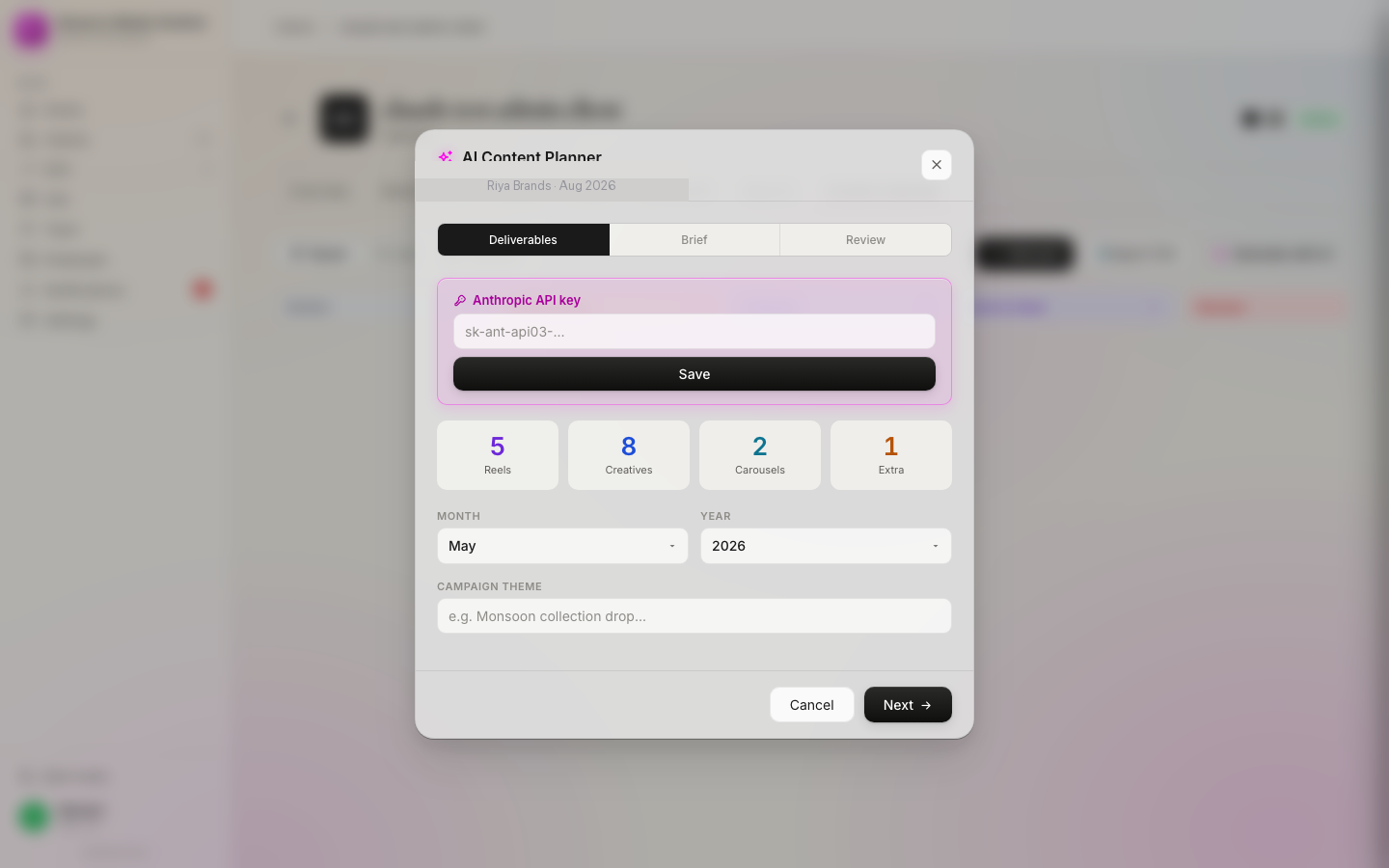
Fashion founders like to approve everything, and a single drop can run to 25 or more posts and stories. Get the block approved in one sitting rather than post by post on WhatsApp. Our content approval workflow template is built for this, and bulk scheduling keeps launch day from becoming a manual scramble.
How should a fashion brand handle UGC and influencers?
UGC is the most persuasive content a fashion brand has, and the most often misused. Two rules:
Get written consent before reposting. A buyer tagging the brand isn't permission to put their photo in an ad. Reply asking if you can feature it, and keep the "yes" on file. If the photo goes into paid ads, say so when you ask.
Label every material connection. A creator who got the outfit free, or at a discount, has a material connection to the brand under the ASCI influencer guidelines, and the post needs a clear disclosure. Our ASCI guide for agencies covers the labels, and our influencer contract template covers usage rights, which fashion brands forget to secure until they want to run a creator's video as an ad.
For creator selection, pick people whose body type, city and budget match the buyer. A creator in your actual size range who tells followers "I'm 5'3", wearing M" drives better orders than a bigger name who looks nothing like the customer.
Where does WhatsApp fit for a fashion brand?
WhatsApp is where a fashion sale is saved or lost in India. The questions that come in are always the same: "Will M fit me? I'm 5'4" and usually wear 34." "Is the colour the same as the photo?" "COD available?" A brand that answers those in minutes converts. One that answers the next day has already lost the sale to a marketplace.
Meta rolled out Business AI on the WhatsApp Business app in India in May 2026. It can answer questions and recommend products from the brand's catalogue in Indian languages, and hand over to a human for anything complex. Meta's announcement cites a 2025 Kantar study finding that 91% of online adults in India chat with a business every week. For a small label, a well-set-up catalogue and size FAQ now does part of the night shift. Check the answers regularly, because an AI that confidently gives the wrong size advice creates exactly the return you're trying to avoid.
Use the same chat to move buyers to prepaid. A small prepaid discount, offered at the moment someone asks about COD, is one of the few content levers that directly changes the return number. For higher volume and broadcast rules, see our WhatsApp Business API guide.
What should an agency report to a fashion founder?
Not follower growth. A fashion founder cares about three numbers, and your report should lead with them:
- Orders by content source. Which Reel, creator or story drove orders, from UTM links and discount codes. Keep it per drop, so the founder can compare launches.
- Return and RTO rate by source. A creator who drives 200 orders at a high return rate may be worth less than one who drives 60 that stick. You'll need the brand's returns data for this. Ask for it in the onboarding, not at renewal.
- Repeat buyers after each drop. How many past buyers came back. This is the retention problem made visible.
Our monthly client report template adapts well if you swap reach for these three. For pricing a fashion retainer with a heavy launch cycle, our guide on what to charge for social media management in India covers how to price production-heavy months separately.
Fashion is also a strong specialism for agencies near India's garment hubs, such as Tiruppur, Jaipur and Surat, where manufacturers are launching their own D2C labels and need someone who understands both the product and the platform. If you're weighing it up, our guide to profitable agency niches helps you test demand first. Jewellery brands share many of these dynamics; we cover them separately in Instagram marketing for jewellery brands.
Frequently asked questions
Which social media platform works best for D2C fashion brands in India?
Instagram is the main discovery and proof channel, because Reels and carousels show fit and styling well. WhatsApp is where size questions get answered and sales close. YouTube helps with longer styling and haul content. Most small labels should do Instagram and WhatsApp properly before adding more platforms.
How can social media reduce returns for a fashion brand?
Show the product honestly before the order. Post the same piece on several body types with heights and sizes stated, include fabric close-ups in daylight, publish the full size chart with each launch, and answer fit questions quickly on WhatsApp. Nudging cash-on-delivery buyers to prepaid also lowers the return rate.
How often should a D2C fashion brand post on Instagram?
Plan around drops rather than a fixed number. A typical drop needs about a week of teasers, a heavy launch day, then two weeks of UGC, styling and restock posts. Between drops, three to four feed posts a week plus daily stories keeps the account alive without burning out the team.
Do fashion brands need to label influencer posts in India?
Yes. If a creator received the outfit free, at a discount, or was paid, that is a material connection under the ASCI influencer guidelines, and the post needs a clear disclosure label. Brands should also agree usage rights in writing before running a creator's content as an ad.
Sources
- Unicommerce, India D2C Report 2026 (April 2026; 410M+ shipments, 6,000+ D2C brands, April 2025 to February 2026).
- Meta, Introducing Business AI on WhatsApp for small businesses in India (14 May 2026), citing Kantar (2025).
Run every drop from one calendar.
Plan the tease-launch-prove block, get the founder's approval in one pass, auto-publish on launch day and report orders rather than likes. From ₹999/month for your whole team — see the agency management software and the Instagram scheduler.