The message usually arrives on WhatsApp at 11 p.m.: "Reach has gone down. Is Instagram blocking us?" Every agency gets it, usually from the client who posts the least and checks insights the most.
Instagram doesn't block brands for being brands. But reach does fall for real, checkable reasons, and most of them can be found in ten minutes inside the app. This is the order we check them in across our client accounts, from most to least common, plus the myths that waste everyone's time.
First, is reach actually down?
Before diagnosing anything, rule out three false alarms:
- One viral post last month. If a reel got 10x the usual reach in October, November will look like a collapse next to it. Compare the median reach of the last ten posts with the ten before that, not the monthly total.
- Fewer posts. Twelve posts reach fewer accounts in total than twenty. Look at reach per post, not reach per month.
- Format change. If the brand moved from reels to statics, total reach drops even if every post performs normally for its format.
If the per-post median is genuinely down by a third or more for a month, it's real. Now find the cause.
What are the real causes, and how do you check each one?
This is the checklist, ranked by how often each turns out to be the answer on our client accounts:
| # | Cause | How to check | Fix |
|---|---|---|---|
| 1 | Too few reels reaching non-followers | Insights → reach split by followers vs non-followers; count reels in the last 30 days | At least two reels a week, built for people who don't know the brand |
| 2 | Posting gaps | Look for weeks with zero posts in the last two months | Batch a month ahead so approvals never leave a hole |
| 3 | Reposted or unoriginal content | Count reposts, other people's clips, watermarked videos, stock carousels | Original footage; remix and add commentary if you must reuse |
| 4 | Not eligible for recommendations | Settings → Account status | Remove or appeal the flagged posts, then wait |
| 5 | Content people don't send or save | Shares and saves per post vs likes | Utility posts, local information, things people forward on WhatsApp |
| 6 | Weak openings on reels | Skip rate and retention graph in each reel's insights | Rework the first three seconds |
1. Too few reels reaching non-followers
Instagram runs separate ranking systems for Feed, Stories, Explore and Reels, as it explains in Instagram Ranking Explained. Statics and carousels mostly reach people who already follow the brand. Reels are where non-followers come from. A local brand with 3,000 followers posting four carousels a week has a ceiling of roughly those 3,000 people, and only a fraction of them see each post.
Check the follower/non-follower split in the account's insights. If non-follower reach has dried up and the reel count fell in the same period, you've found it. For what makes a reel worth recommending, Adam Mosseri has named watch time, likes per reach and sends per reach as the signals that matter most, as summarised in Buffer's algorithm guide.
2. Posting gaps
This is the cause clients least want to hear, because it's usually theirs. A calendar of 16 posts becomes nine because approvals sat in a WhatsApp group for a week, the shoot got postponed, and Diwali happened. Two silent weeks, then a burst of five posts in three days, then nothing again.
We've never seen a single gap "punish" an account. What gaps do is reduce the number of chances the brand gets in front of non-followers, and bursts compete with each other. Steady beats heroic.
3. Reposted or unoriginal content
Instagram has favoured original content in recommendations since 2022, when Mosseri said it would value originals over reposts (TechCrunch). In April 2026 it went further: accounts that mostly repost other people's photos and carousels can lose eligibility for recommendations altogether, and Mosseri's advice to such accounts was to remix the material and make it their own (Tubefilter).
Brand accounts slip into this without noticing: reposting customer stories as feed posts, using the same stock carousel template a hundred other brands use, uploading the brand's own reel with another app's watermark still on it. Count how much of the last month was genuinely shot or designed for this brand.
4. The account isn't eligible for recommendations
This is the thing people call a "shadowban," and it's the one cause Instagram shows you directly. Open Settings → Account status on the business account. If any post goes against the recommendation guidelines, Instagram says so there, and the account's content may not be suggested to non-followers until it's resolved. Common triggers on brand accounts are unlicensed music on old reels (our guide to music rights for brand reels covers this), health or before-and-after claims, and contest posts that read as engagement bait.
If Account Status is clean, stop saying shadowban. The cause is somewhere else on this list.
5. Content people don't send or save
A post that gets 80 likes from loyal followers and zero shares tells Instagram it's pleasant but not worth showing anyone new. Look at shares and saves per post. The posts Indian audiences forward are practical: a price list, a "what to check before you buy" carousel, an exam-date reminder, a new branch's address and timings. Greetings posts with a logo are almost never forwarded.
6. Weak openings on reels
If the brand is posting enough reels and still not reaching non-followers, open each reel's insights. A high skip rate means people leave in the first three seconds, before Instagram has a reason to show it further. Our guide to reel hooks for brands covers how to fix the opening without reshooting.
Which reach myths can you ignore?
- "Business accounts get less reach than personal ones." Ranking is based on how people respond to posts. Switching back to a personal account loses insights, contact buttons and API publishing, and gains nothing we've ever been able to measure.
- "Scheduling tools get you penalised." Tools that publish through Meta's official Content Publishing API create the same post the app does. Across the client accounts we auto-publish for, we haven't seen a difference. (Our post on Instagram API access for auto-posting explains how that connection works.)
- "Editing the caption kills reach." Fixing a typo doesn't reset anything that matters. Deleting and reposting does more damage, because you throw away the early responses.
- "Thirty hashtags will bring it back." Hashtags help categorise a post. They don't rescue content people aren't watching or sharing.
- "Instagram is punishing us for running ads." Paid and organic delivery are separate. If anything, a reel that did well as an ad is evidence of what to make next.
How to explain a reach drop to the client
Don't open with the algorithm. Open with the checklist: "We checked six things. Account status is clean. Reels fell from eight to three last month because the shoot moved, and two weeks had no posts while approvals were pending. Here's the plan for December." That conversation is about inputs the agency and the client control, which is the only kind of conversation that keeps a retainer.
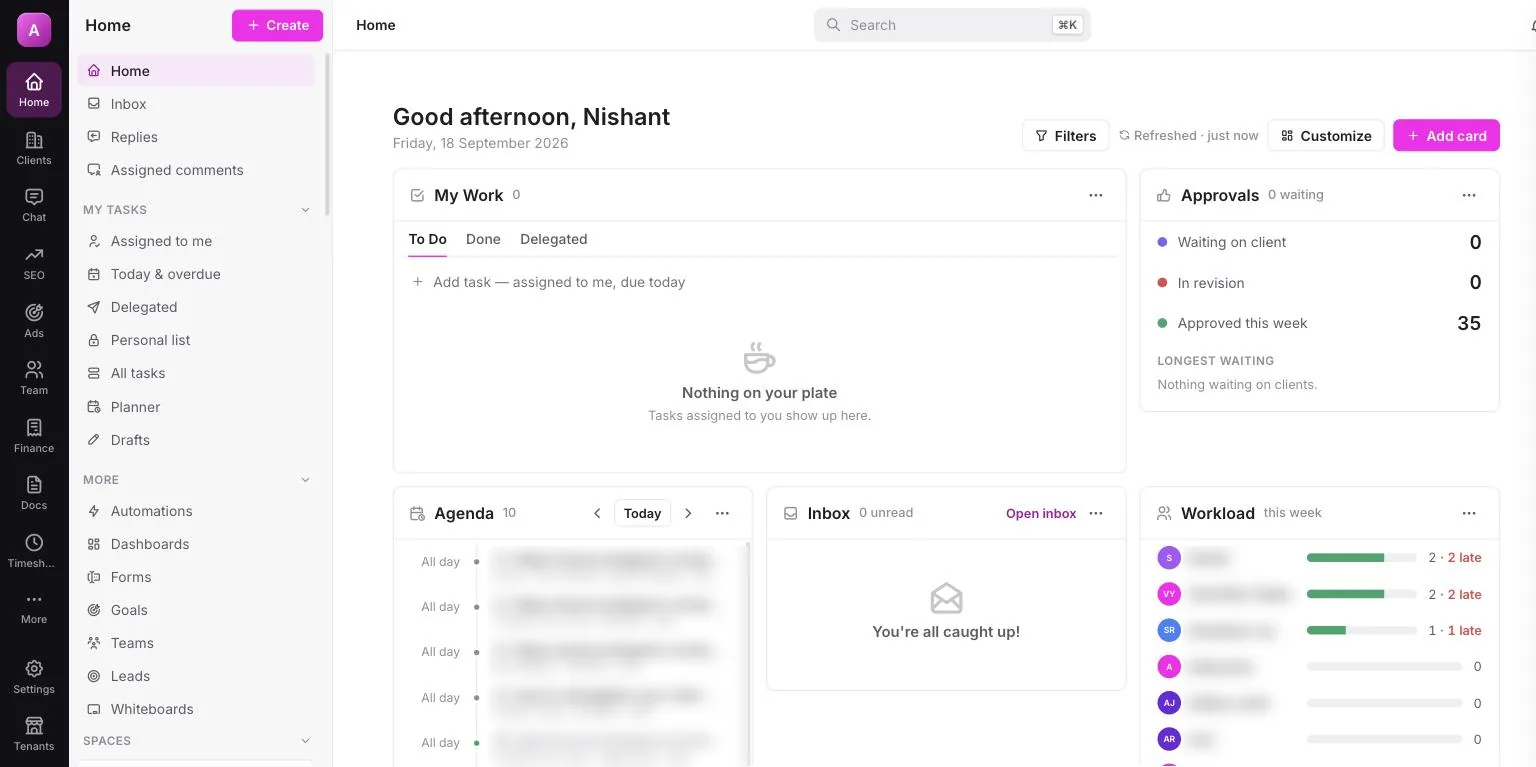
Put reach per post next to the number of posts and reels published in the monthly client report, so a drop and its cause sit on the same page. And if approvals are the cause, fix the process: a client approval app with a clear "waiting on you" list ends most posting gaps on its own.
Whether your clients are shops in Jaipur or clinics in Pune, the order is the same: rule out false alarms, check Account Status, then look at reels, gaps and originality before anyone says the word algorithm.
Frequently asked questions
Does switching from a business account to a personal account increase reach?
There is no evidence it does, and you lose insights, contact buttons and API publishing in the process. Instagram ranks posts on how people respond to them, not on the account type. If reach fell after a switch, the timing is almost always a coincidence with a content or posting change made in the same weeks.
Do scheduling tools reduce Instagram reach?
Not in our experience across client accounts. Tools that use Meta's official Content Publishing API create the same post you would create in the app. What does hurt is what scheduling makes easy: batching a month of near-identical graphics, or queuing posts without checking comments and replying while the post is fresh.
How long does it take for Instagram reach to recover?
If the cause is a recommendation restriction, reach returns once the flagged content is removed or the appeal succeeds. If the cause is content, expect four to eight weeks of consistent, better posts before the trend line turns. Judge recovery on the median reach of the last ten posts, not on one viral reel.
Never leave a gap in a client's feed
Plan the month, chase approvals from one list, and auto-publish approved posts and reels to Instagram and Facebook on schedule, in the same agency workspace as your reports and GST invoices. From ₹999/month. Try it free for 3 days, no card needed, with a 7-day money-back guarantee.