Picture a monthly report most agencies have sent at some point. Followers up, reach doubled, one reel past a lakh views. The café owner reads it on WhatsApp and replies with one line: "Weekday lunch is still empty." The owner is right. The report shows what was easy to pull, not what the client is paying for.
That gap is what KPI-setting is meant to close. Most guides list twelve or fifteen social media KPIs and leave you to pick. The better way is the other way round: start with the client's business, pick the one number that matters to it, and only then choose the metrics that explain that number.
What is the difference between a social media KPI and a metric?
A metric is anything you can count: reach, likes, comments, followers. A KPI is the small number of metrics you have agreed with the client to judge the work by, each one tied to a business goal. Brandwatch's glossary draws the same line: every KPI is a metric, but most metrics are not KPIs.
This matters in a client relationship because the KPI is what the client remembers. If you agree on "reach" at kickoff, you will be judged on reach, even when the owner privately cares about bookings. Agree on the wrong KPI and you can hit every target and still lose the account.
Which social media KPIs should you track for each type of client?
Use this as the starting point when a new brand signs, then adjust it to what the owner tells you at kickoff. The headline KPI goes at the top of every report; the supporting metrics sit below it and explain the movement.
| Client type | Headline KPI | Supporting metrics | Where the headline number comes from |
|---|---|---|---|
| Restaurant / café | Calls, table bookings, Zomato/Swiggy page visits from social | Reach in the city, saves, profile visits | Front desk count, Google Business Profile calls |
| Clinic / doctor | Appointment enquiries (WhatsApp + calls) | Profile visits, website clicks, reel views on explainer content | Reception log, tagged WhatsApp link |
| D2C / e-commerce | Website sessions and orders from social | Link clicks, shares, saves on product posts | GA4 with UTM-tagged links, Shopify reports |
| Real estate | Site-visit enquiries | Reel views on walkthroughs, profile visits, DMs | Sales team's lead sheet or CRM |
| School / coaching institute | Admission enquiries in season | Reach among local parents, comments, shares | Admission desk register |
| Jewellery / retail showroom | Showroom walk-ins mentioning Instagram, enquiries on DM | Saves, shares, profile visits | Staff asks "how did you hear about us?" |
| B2B / manufacturer | Qualified enquiries, often via LinkedIn | Engagement from target companies, website clicks | Sales enquiries tagged by source |
| Founder / personal brand | Inbound opportunities: talks, partnerships, leads | Follower growth, comments, profile visits | Founder's own count, reviewed monthly |
Notice the right-hand column. For most Indian small businesses the headline number does not live inside Instagram at all. It lives with the receptionist, the sales person or the owner's phone. That is the uncomfortable part of KPI-setting, and it is why you have to agree on the counting method at kickoff, not in month three. AgencyAnalytics makes the same point for local, service-based clients: they care about leads and cost per acquisition, not likes.
If you work a lot with a single vertical, our guides on Instagram marketing for restaurants and social media for doctors and clinics go deeper on what those businesses respond to.
How do you set KPIs with a client at kickoff?
- Ask the business question first. "If this works, what is different in your business in six months?" The answer is usually more enquiries, fuller weekdays, a new product moving, or simply being taken seriously. That is your headline.
- Pick one headline KPI. One. If the client insists on three, rank them.
- Take a baseline. Note the last 90 days of the headline number and the main supporting metrics before you post anything. Without a baseline, every month is an argument.
- Set a target and a time frame. Hootsuite's KPI guide recommends SMART targets for this reason. "More enquiries" is not a target; "from about 20 to 30 WhatsApp enquiries a month by March" is.
- Agree who counts what. If the headline lives with the front desk, someone at the client's end sends the number every week. Put the name in the onboarding document.
- Write it down. One paragraph in the client onboarding form or the retainer: headline KPI, baseline, target, counting method, review date.
Which Instagram metrics changed, and what does that do to old reports?
Two changes from the last two years affect every client report.
- Views replaced impressions and plays. Meta moved to "views" as the main content metric across its apps, explained on Meta's creators site. Views count repeat views, so they are usually higher than the old reach-style numbers. If your report compares this year's "views" with last year's "impressions", you are comparing two different things. Say so in the report, or start a fresh baseline.
- Sends matter for reaching new people. Instagram head Adam Mosseri has named watch time, likes and sends as the top ranking signals, and has described "sends per reach" (how many people who saw a post sent it to someone in a DM) as one of the most important, as summarised by Buffer's algorithm guide. For a brand that wants new customers, shares belong in the supporting metrics.
Where do followers and likes belong in the report?
Further down, as context. They are not useless: a growing, relevant audience makes every later post cheaper to reach, and a sudden drop in likes can be the first sign that content has gone stale. But followers can rise while sales stay flat, and they can be bought. Cloud Campaign's agency advice is to keep follower growth in every report but never as the headline, and that is the right call.
A report order that keeps the client's attention on what matters:
- The headline KPI, against baseline and target.
- Two or three supporting metrics, each with one line on why it moved.
- The top three posts and what they had in common.
- Audience growth as context.
- What we will change next month.
Our monthly social media report guide covers the layout in full, and how to prove social media ROI covers turning the headline into rupees when the client asks.
How we track client KPIs at our agency
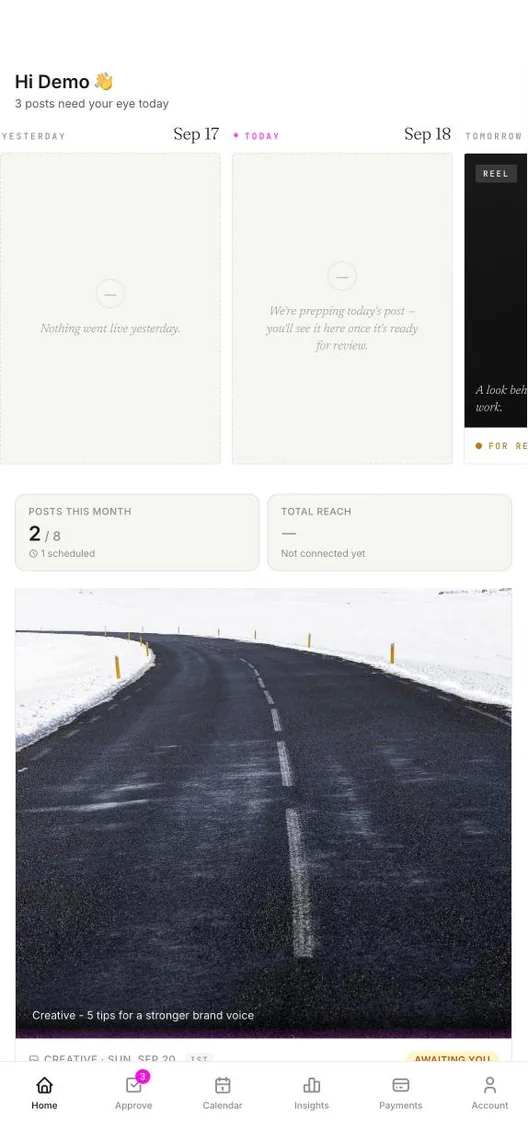
The Meta side of the numbers is the easy part, so we stopped doing it by hand. In My Digital Sevak, the monthly report for each brand has a "Pull from Meta" button that fills in reach, views, likes, comments, shares, saves, profile visits, website clicks, followers and engagement rate from the connected account, plus that month's top three posts. The account manager adds the headline number the client's team sent, writes the notes, and the report goes to the brand by email. The client can also open past reports from their portal.
What no tool does for you is the headline. Enquiries that come in on WhatsApp, walk-ins and phone calls only exist if someone counts them. Ask for that number on a fixed day each week, in the same WhatsApp group where the client already talks to you, so it doesn't feel like a new chore. For agencies in Dehradun and other tier-2 cities, where most clients are owner-run local businesses, this weekly count is often the only honest measure of whether social media is working.
Frequently asked questions
How many social media KPIs should a client have?
One headline KPI and two or three supporting metrics. The headline KPI is the business result the client cares about, such as enquiries, bookings or store visits. The supporting metrics, like reach, saves and profile visits, explain why that number moved. More than five numbers and the client stops reading the report.
Is follower count a good KPI for clients?
Not as the headline. Followers are worth showing as context, because a growing audience makes every later post cheaper to reach. But followers can grow while sales stay flat, and they can be bought. Lead with a number tied to the client's business, and put follower growth further down the report.
What if the client's sales do not come from social media directly?
Track the step just before the sale that social media can influence: profile visits, website clicks, WhatsApp enquiries or calls. Agree at kickoff how those will be counted, for example a tagged link or a weekly count from the front desk, so neither side argues about the number later.
Sources checked on 28 November 2026: Brandwatch, AgencyAnalytics and Hootsuite KPI guides; Meta's creators site on the move to views; Buffer's summary of Adam Mosseri's statements on ranking signals. Metric names in Meta's tools change often; check your own Insights before comparing months.
Reports that fill themselves in
Monthly reports that pull each brand's numbers and top posts from Meta, a client portal where brands read them, and your calendar, approvals and Instagram publishing in the same workspace. From ₹999/month. Try it free for 3 days, no card needed, with a 7-day money-back guarantee.